 Beckie's Kitchen
One-Pot Chicken and Rice for a Weeknight
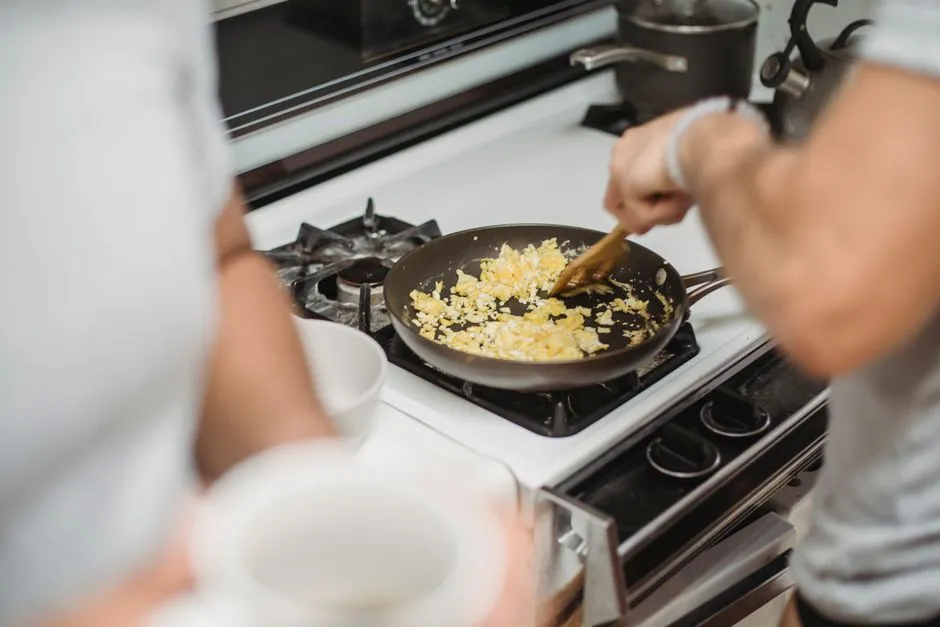
- A one-pan dinner with a closed formula
- Ingredients for six servings
- Set up safely before the chicken touches the pan
- How to make one-pot chicken and rice
- Why instant brown rice matters here
- The cooked-chicken path is separate
- How to halve the recipe cleanly
- Fixes for dry, firm, or wet rice
- Changes that preserve the formula
- Store and reheat the whole dish safely
- The weeknight sequence to remember
- Sources
A one-pan dinner with a closed formula
This one-pot chicken and rice uses thinly sliced boneless, skinless chicken breast and instant brown rice. Brown the raw chicken in oil for 5 minutes, add a measured mixture of water and teriyaki sauce, then cook the rice covered for 5 minutes. Stir in frozen vegetables for another 5 minutes, verify the chicken has reached 165°F (74°C), and finish with a 5-minute covered rest.
The quantities and sequence are based on Iowa State University Extension's Teriyaki Rice Bowl. The rice type is not a casual detail: this version is designed for instant brown rice, not regular long-grain white rice, regular brown rice, converted rice, or ready-to-heat rice. Those products absorb liquid on different schedules. Use the named rice here or choose a recipe written for the rice you have.
The clock organizes the pan. A food thermometer decides when the chicken is safe to serve.
Ingredients for six servings
- 1 tablespoon canola or vegetable oil
- 3/4 pound (12 ounces) boneless, skinless chicken breast, thinly sliced into similarly sized strips
- 2 cloves garlic, minced
- 2 cups water
- 1/2 cup teriyaki sauce
- 2 cups uncooked instant brown rice
- 1 bag (16 ounces, or 1 pound) frozen stir-fry vegetables
Iowa State lists this formula as six 1-cup servings. Use a large, deep skillet with a well-fitting lid, a heat-safe spatula, and a clean food thermometer.
Teriyaki sauces vary. Read the label for allergens, and use ingredients verified as safe for anyone with a food allergy. Prevent cross-contact with utensils and work surfaces.
Set up safely before the chicken touches the pan
Keep the frozen vegetables and other ready-to-eat foods away from raw chicken and its juices. The CDC advises using a separate cutting board for raw chicken, washing hands with soap and water for at least 20 seconds before and after handling it, and washing the board, utensils, dishes, and counters with hot, soapy water afterward.
Do not rinse raw chicken. The FDA and CDC both explain that splashing water can spread contamination around the sink and nearby surfaces. Cooking, followed by a thermometer check, is the safety step.
Slice the chicken with separate clean tools and make the strips similar in size. Keep it refrigerated until the pan and other ingredients are ready.
How to make one-pot chicken and rice
1. Measure every part before heating the skillet
Measure 2 cups water, 1/2 cup teriyaki sauce, and 2 cups instant brown rice. Keep them separate for now. Open the frozen vegetables but leave them frozen. Once raw chicken is in the pan, the recipe moves quickly; measuring early prevents a contaminated hand from reaching into a cupboard or handling a bottle.
Do not prepare the rice according to its package and then add the recipe liquid. The 2 cups water and 1/2 cup sauce are the complete measured liquid for this skillet.
2. Cook and stir the raw chicken for 5 minutes
Heat 1 tablespoon oil in the large skillet over medium-high heat. Add the thin chicken strips in an even layer. Cook and stir for 5 minutes, turning pieces so more than one surface contacts the pan.
This is the browning stage, not the doneness test. Do not taste the chicken or assume white or browned meat is safe. The strips continue cooking after the liquid is added.
If browned residue begins to blacken, lower the heat. The water will loosen properly browned residue into the sauce.
3. Add garlic, water, and sauce
Add the minced garlic, 2 cups water, and 1/2 cup teriyaki sauce. Stir across the bottom to release the browned layer, then bring the liquid to a full boil. Raw chicken remains in the skillet through this step.
The mixture contains 2 1/2 cups total measured liquid for 2 cups instant brown rice. That is the complete skillet formula, not a general rice ratio to transfer to other products.
4. Add instant brown rice and cook covered for 5 minutes
Stir in the 2 cups instant brown rice and let the mixture return to a boil. Reduce the heat to low, cover the skillet, and simmer for 5 minutes.
Keep the lid on for the full covered stage. Repeatedly opening it releases steam and changes the absorption conditions. The simmer should be active but controlled; liquid should not spit from under the lid. If it does, reduce the heat.
5. Add the frozen vegetables and cook for 5 minutes
Remove the lid with the opening turned away from your face and hands; trapped steam can burn. Add the 16 ounces of frozen stir-fry vegetables. Stir to distribute the cold vegetables through the hot rice, then cook and stir for 5 minutes as the Iowa State recipe directs.
Use vegetables cut for stir-frying rather than large frozen florets or dense blocks. Do not thaw them on the counter. If the bag has frozen into one solid mass, break it apart while it remains sealed or thaw it safely according to its package instructions.
6. Check the chicken at 165°F, then rest covered
Check several of the thickest chicken strips in different parts of the skillet. Insert the thermometer into the thickest portion from the side when the piece is large enough. FoodSafety.gov gives 165°F (74°C) as the safe minimum internal temperature for all poultry.
If any checked piece is below 165°F, keep cooking over low heat and recheck with a clean thermometer probe. Do not serve the rice or vegetables early: they have shared a pan with raw chicken and its cooking liquid. If the rice becomes dry before the chicken is ready, add a small measured splash of water around the edge, cover, and continue heating until the chicken reaches the required temperature.
Once the chicken is at least 165°F, turn off the heat, cover the skillet, and let it stand for 5 minutes. Then fluff the rice gently and serve. The rest helps the instant rice take up remaining moisture; it is not a substitute for the thermometer endpoint.
Why instant brown rice matters here
The Iowa State formula is specifically timed for instant brown rice. Regular brown and white rice follow different package ratios and schedules.
Our guide to cooking rice on the stove explains why matching ratio and rest to the rice matters. For this dinner, use instant brown rice or another complete recipe.
Ready-to-heat rice is not the same as dry instant rice. It has already been cooked and cannot absorb this formula's 2 1/2 cups of liquid. Do not use it here.
The cooked-chicken path is separate
Iowa State also permits leftover or planned-over cooked meat. If you use cooked chicken, skip the raw-chicken browning step and add the measured chicken with the garlic, water, and teriyaki sauce. Continue with the same boil, instant-rice, vegetable, and rest sequence.
Use 12 ounces of cooked, sliced chicken so the quantity remains explicit. Because it is a leftover, check that it reaches 165°F (74°C) before serving. If it does not, continue heating and checking just as you would in the raw-chicken path.
Do not partly brown raw chicken, refrigerate it, and treat it as cooked chicken later. Choose one route at the start: raw chicken that completes the full skillet process, or previously fully cooked chicken that is reheated through the liquid and rice stages.
How to halve the recipe cleanly
A half batch makes three 1-cup servings. Use:
- 1 1/2 teaspoons oil
- 6 ounces boneless, skinless chicken breast
- 1 clove garlic
- 1 cup water
- 1/4 cup teriyaki sauce
- 1 cup uncooked instant brown rice
- 8 ounces frozen stir-fry vegetables
The oil conversion is exact: 1 tablespoon equals 3 teaspoons, so half is 1 1/2 teaspoons. Every other quantity is divided by two. Use a skillet that still allows the chicken to lie in an even layer, and retain the same sequence. Treat the listed times as checkpoints and verify the chicken at 165°F; a smaller batch is not permission to skip the thermometer.
For a double batch, use two skillets and make the full formula in each. One overfilled pan changes the depth, crowding, heating rate, and evaporation.
Fixes for dry, firm, or wet rice
If the instant rice is firm and the skillet is dry after the chicken has reached 165°F, add water one tablespoon at a time, cover, and heat on low. Give the added water time to steam into the rice before deciding whether it needs more. A large unmeasured pour can turn a slightly firm batch into soup.
If liquid remains after the chicken and rice are done, uncover the skillet and stir over low heat so excess moisture can evaporate. Keep checking the bottom because the sweet components in teriyaki sauce can scorch. Stop when the mixture is moist but no longer pooled; it will tighten further during the 5-minute covered rest.
If the rice is soft but the chicken has not reached 165°F, safety wins. Continue heating until the chicken reaches the minimum temperature. Next time, slice the chicken more evenly and avoid pieces much thicker than the rest. Do not serve undercooked chicken to protect the rice texture.
Changes that preserve the formula
Replace the listed vegetables with a different 16-ounce frozen stir-fry blend. Green onions, lime, black pepper, or pepper flakes can be added after cooking. Do not replace the teriyaki sauce with a thick glaze or add undrained vegetables or juice; those changes alter the measured liquid. For more poultry guidance, see our baked chicken breast guide.
Store and reheat the whole dish safely
Refrigerate chicken and rice within 2 hours of cooking, or within 1 hour if the food is exposed to temperatures above 90°F (32°C). Divide the dinner into shallow containers for faster cooling rather than leaving the covered skillet on the counter. FoodSafety.gov says cooked leftovers should be used within four days or frozen within that period.
Reheat only the portion you plan to eat and bring leftovers to 165°F (74°C), checking with a food thermometer. When microwaving, cover the food, rotate or stir it for even heating, allow the appliance's indicated standing time, and check more than one place because cold spots can remain. Add a spoonful of water before reheating if the rice seems dry; that is a texture adjustment, not the safety check.
Discard perishable chicken and rice left at room temperature beyond the applicable 2-hour or 1-hour limit. Smell and appearance cannot replace time, temperature, and safe handling.
The weeknight sequence to remember
For the raw-chicken route: brown thin chicken strips for 5 minutes; add 2 cups water and 1/2 cup teriyaki sauce; bring to a boil; add 2 cups instant brown rice; cover and simmer 5 minutes; add 16 ounces frozen vegetables and cook 5 minutes; verify the chicken at 165°F; then cover and rest 5 minutes. Keep the ingredient type, liquid, times, and thermometer check together. That is what makes this one-pan dinner repeatable.
Sources
- Iowa State University Extension, Spend Smart. Eat Smart. — Teriyaki Rice Bowl
- CDC — Chicken and Food Poisoning
- FDA — Food Safety at Home
- FoodSafety.gov — Safe Minimum Internal Temperatures
- FoodSafety.gov — Leftovers: The Gift that Keeps on Giving
Frequently asked questions
What kind of rice works in this one-pot chicken and rice?
Use uncooked instant brown rice. Regular brown rice, regular white rice, converted rice and ready-to-heat rice require different liquid or timing and are not direct substitutes in this formula.
How do I know the chicken is done?
Check several of the thickest strips with a clean food thermometer. FoodSafety.gov gives 165°F (74°C) as the safe minimum internal temperature for poultry; color and cooking time are not substitutes.
Can I make this with cooked chicken?
Yes. Skip the raw-chicken browning stage and add 12 ounces of fully cooked chicken with the garlic, water and sauce. Reheat it to 165°F (74°C) before serving.
Why is my chicken and rice watery?
Confirm that you used dry instant brown rice and only the measured water and sauce. After the chicken reaches 165°F, stir uncovered over low heat to evaporate pooled liquid, then complete the covered rest.
How long can chicken and rice stay in the refrigerator?
Refrigerate it in shallow containers within 2 hours, use it within four days, and reheat leftovers to 165°F (74°C). Use the 1-hour limit when food is exposed to temperatures above 90°F (32°C).